Carbohydrates, context and the HbA1c result.
Two dietary trials show why a food label tells us less than the full intervention.
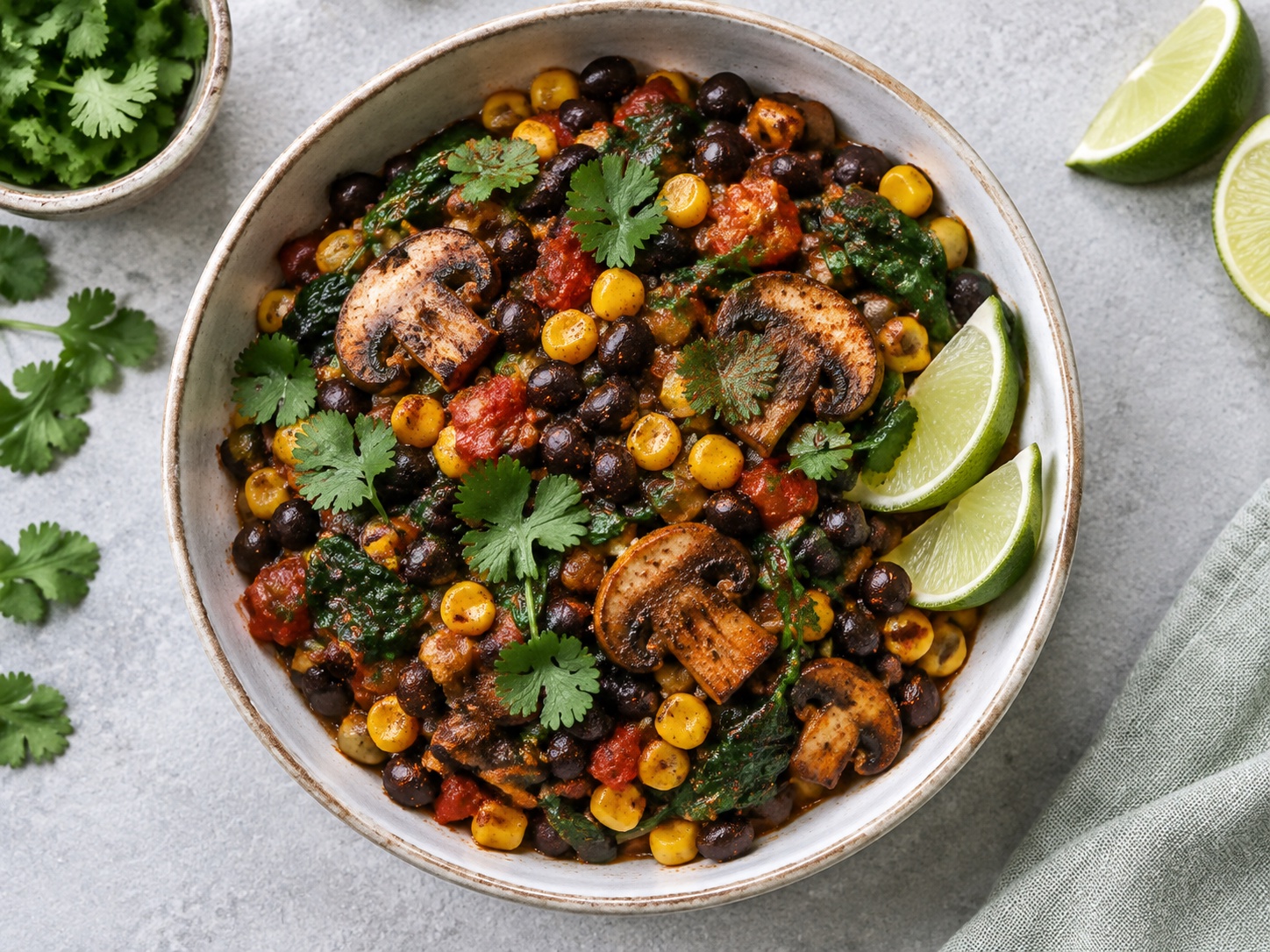
Illustrative food image, not a photograph of the study intervention.
A dietary pattern, not a rice experiment.
Lee’s Korean randomized trial compared a brown-rice-based vegan pattern with a conventional diabetes diet. HbA1c improved more in the vegan arm over 12 weeks. Brown rice was part of a package of changes, so this is not evidence that adding rice alone produces the same result.
Lee YM, Kim SA, Lee IK, et al.. PLOS ONE 11:e0155918, 2016. PMID 27253526 · DOI
Insulin sensitivity is a separate endpoint.
Kahleova’s trial directly assessed insulin sensitivity in adults assigned to calorie-restricted diets with meals provided. The vegetarian group improved more, but also lost more weight, and exercise was introduced midway. Limited yogurt was allowed. Calling that trial vegan or oil-free would change what was actually tested.
Kahleova H, Matoulek M, Malinska H, et al.. Diabetic Medicine 28:549–559, 2011. PMID 21480966 · DOI
Read the whole-trial result before the subgroup.
Barnard’s earlier trial improved HbA1c in both arms. The all-participant between-group comparison was not statistically significant; the medication-stable subgroup favored the vegan diet. Keeping those analyses separate avoids turning a qualified result into a universal claim.
Barnard ND, Cohen J, Jenkins DJ, et al.. Diabetes Care 29(8):1777–1783, 2006. PMID 16873779 · DOI
Meals belong alongside medication monitoring.
Our skillet combines cooked beans, vegetables and a quick steam-sauté technique. It is a cooking idea, not a measured glucose intervention. People taking diabetes medication should discuss substantial dietary changes with their care team rather than adjusting treatment from an article.